
Visit Plomari
The History of Plomari
From old Plomari in the hills to the harbour town, this story is tied to olives, ships, soap and ouzo.
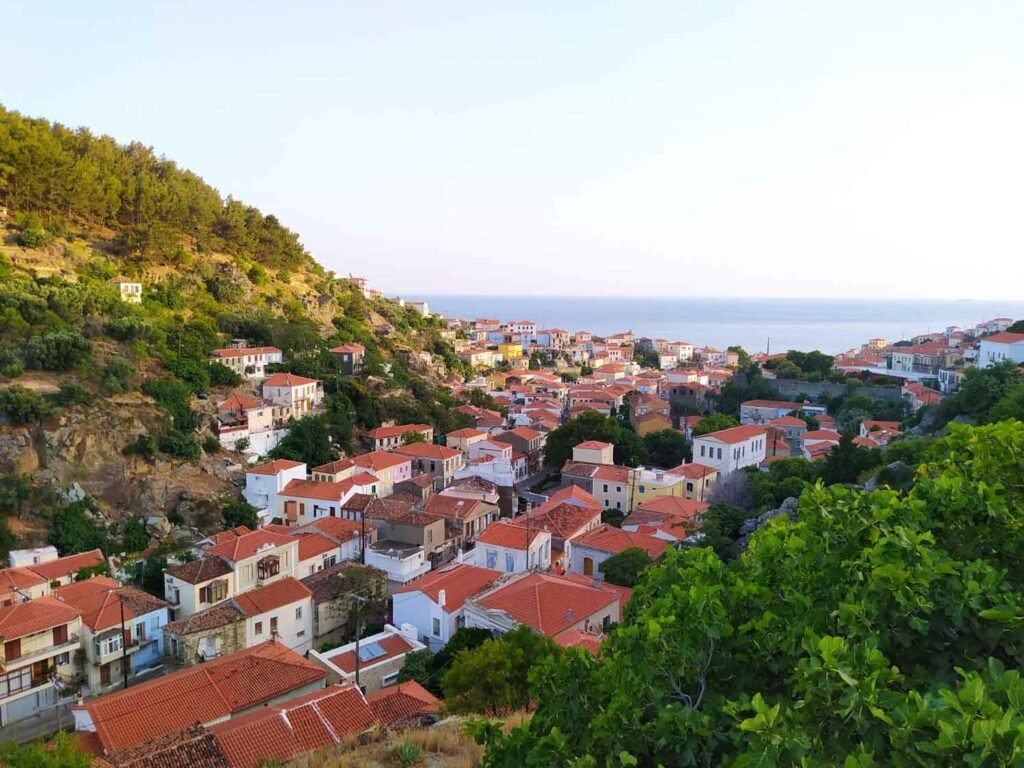
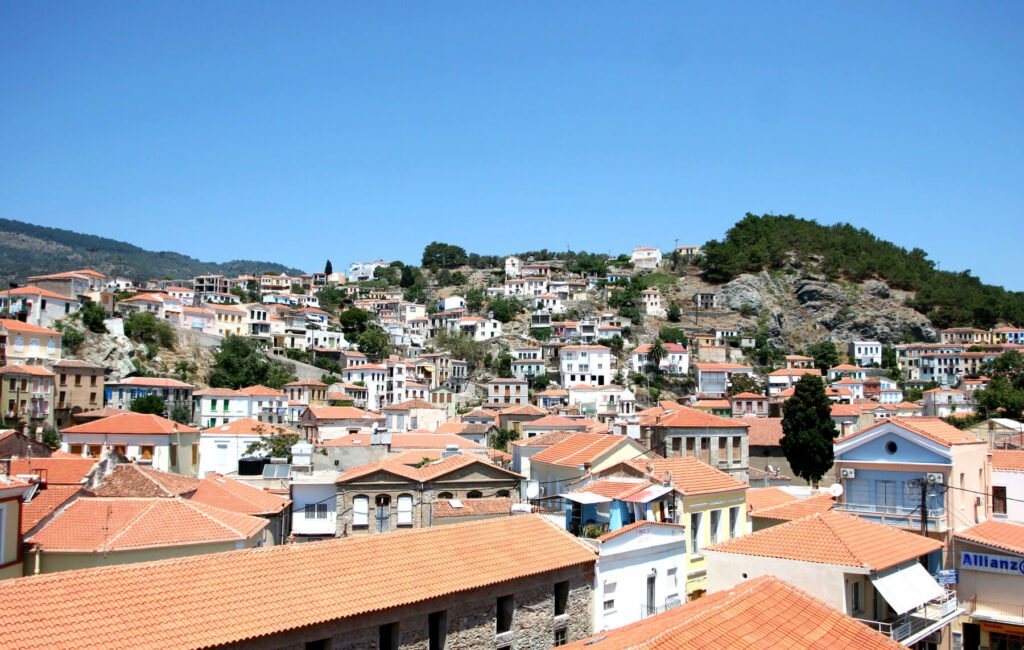
To understand Plomari, look beyond the waterfront. The present town is younger than many Lesvos villages and grew as people moved towards the sea. Its houses, workshops, warehouses and chimneys still tell the story of a community connected to the Aegean.
Before the present town
The wider region once consisted of small settlements collectively known as Ploumaria. Megalochori was the most important inland centre and remains closely connected with the earlier history of Plomari.
At the mouth of the Sedountas stood a small coastal settlement called Potamos. Its position by the sea would become increasingly important.
Fires and the move to the coast
Repeated fires in 1841–1843 damaged old Plomari, while the severe frost of 1850 harmed the island’s olive trees. These events accelerated the movement of residents towards Potamos and the coast.
The new town developed around the stream, harbour and production buildings, with neighbourhoods growing on both sides and up the slopes.
A town of trade and production
From the mid-19th to the early 20th century, olive presses, soap factories, distilleries, shipyards and warehouses worked in direct connection with the port. Ships and products travelled across the Aegean, Asia Minor, the Black Sea and the Mediterranean.
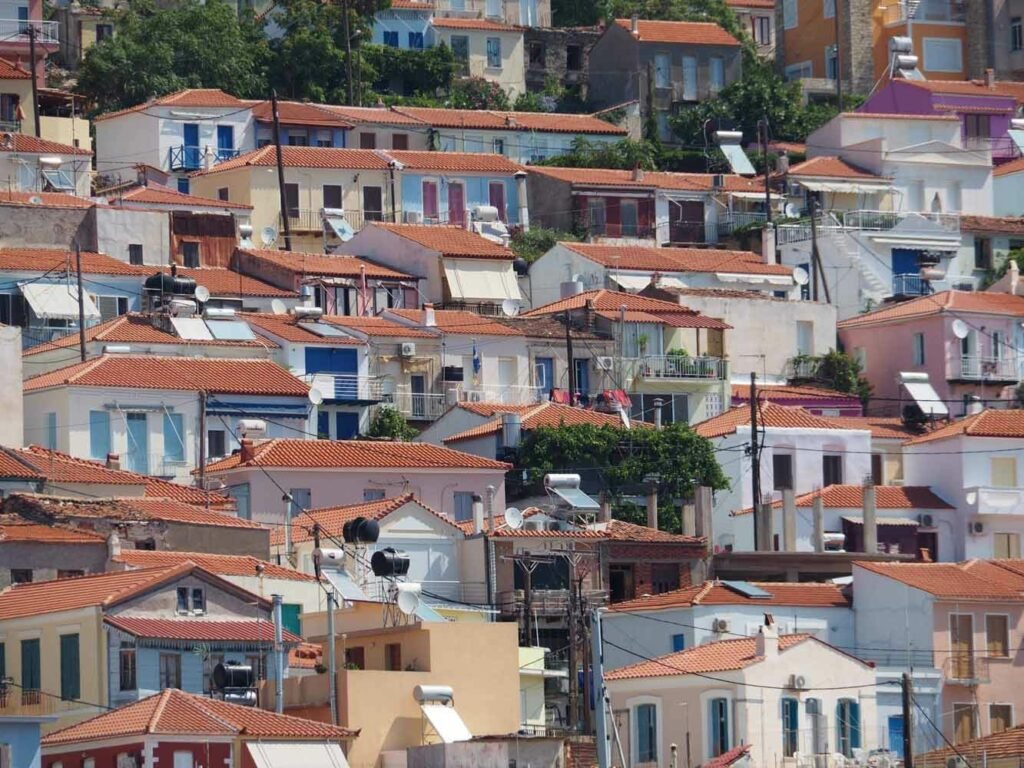
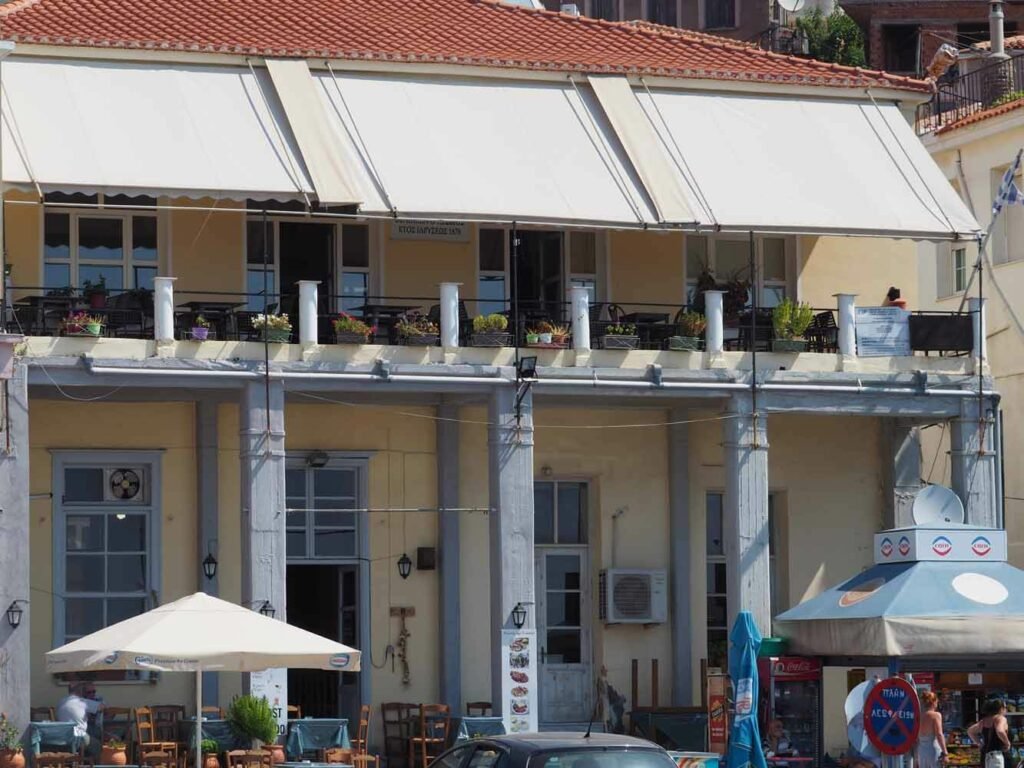
Prosperity left its mark on large houses, churches and industrial buildings. Plomari, with the rest of Lesvos, became part of Greece in November 1912.
After 1922
The Asia Minor Catastrophe and changing trade networks weakened the local economy. Ouzo production, agriculture and later tourism created new opportunities, while migration linked Plomari with communities elsewhere in Greece and abroad.
Where to see the story today
- Old neighbourhoods and houses with traditional projecting upper floors.
- Tarsanas and the memory of local shipbuilding.
- Warehouses, chimneys and industrial buildings along the coast.
- Ouzo museums, the temporarily closed Folklore Museum and village collections.