
Visit Plomari
Ouzo of Plomari: From the Still to the Table
Discover why Plomari is known as the home of ouzo and how the spirit still belongs to local production and shared meals.
Plomari did not acquire its ouzo reputation through a slogan. Distilling developed within the commercial town of the 19th century, beside olive presses, soap works, shipyards and the harbour. Distilling families refined recipes and techniques that travelled far beyond Lesvos.
Why ouzo took root here
The port opened routes for ingredients, trade and exports, while knowledge passed from one generation of distillers to the next. Anise, other aromatics and distillation in copper stills give every label its own character.
People often say that ouzo tastes different in Plomari. Sea air, local food and the setting certainly change the experience, but the best way to understand the drink is not to taste everything at once. Visit one producer, then compare one or two labels later over food.
Why ouzo turns cloudy
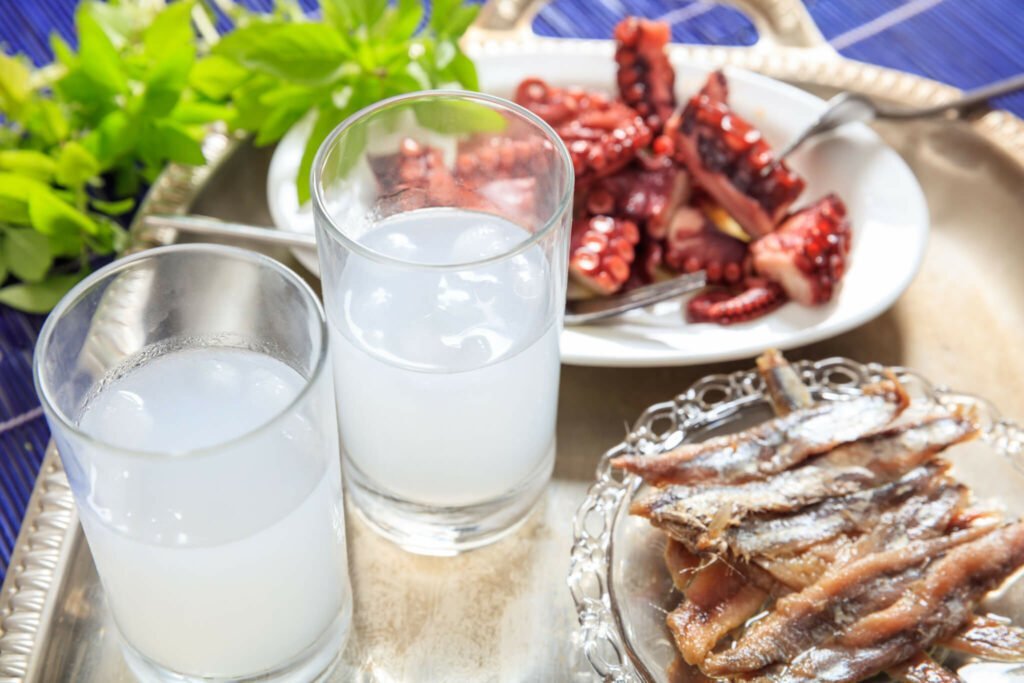
When cold water or ice is added, the essential oils of anise create the characteristic milky appearance. The change in colour does not make the drink weak, so pour modestly, sip slowly and keep food on the table.
How to enjoy it
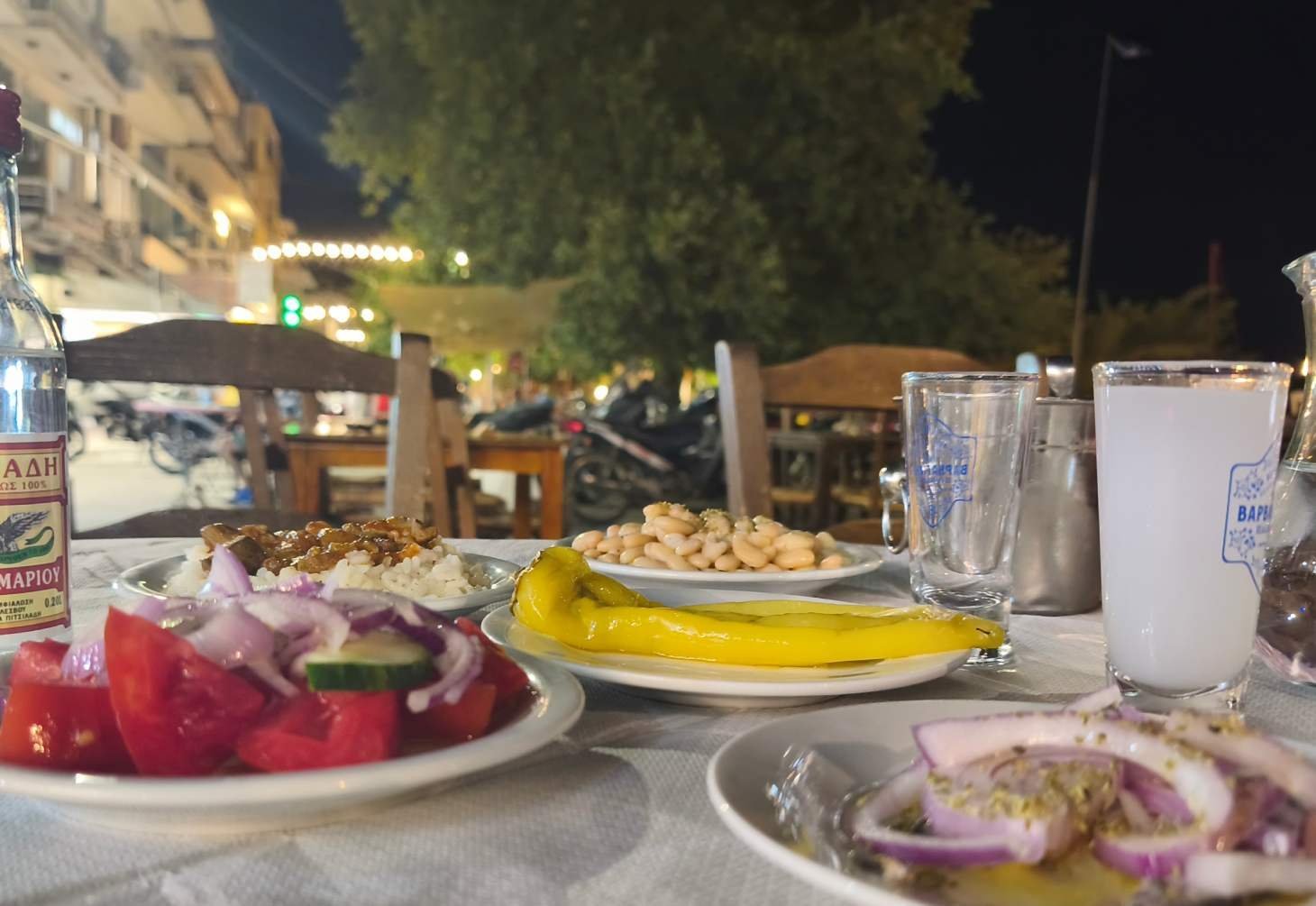
- Begin with a small measure and add cold water to taste.
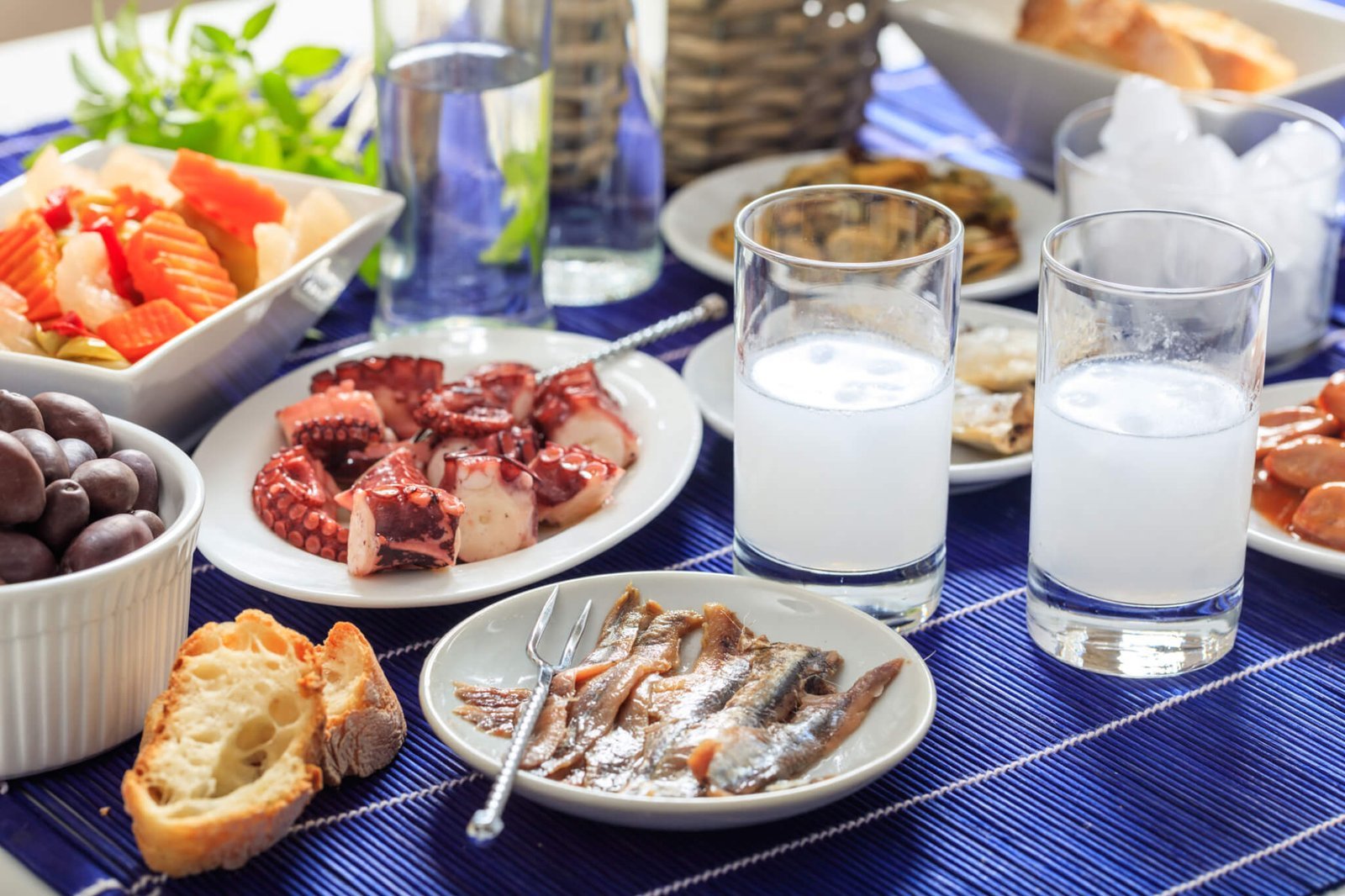
- Share fish, seafood, cheese, olives and vegetables.
- Give the aromas time instead of drinking quickly.
- Never drive after a tasting or a meal with alcohol.
- Keep alcohol separate from swimming and boating.
Take a little Plomari home
Compare labels in the town’s shops and ask about their character. Check baggage rules for liquids and alcohol before flying, and pack glass bottles securely.